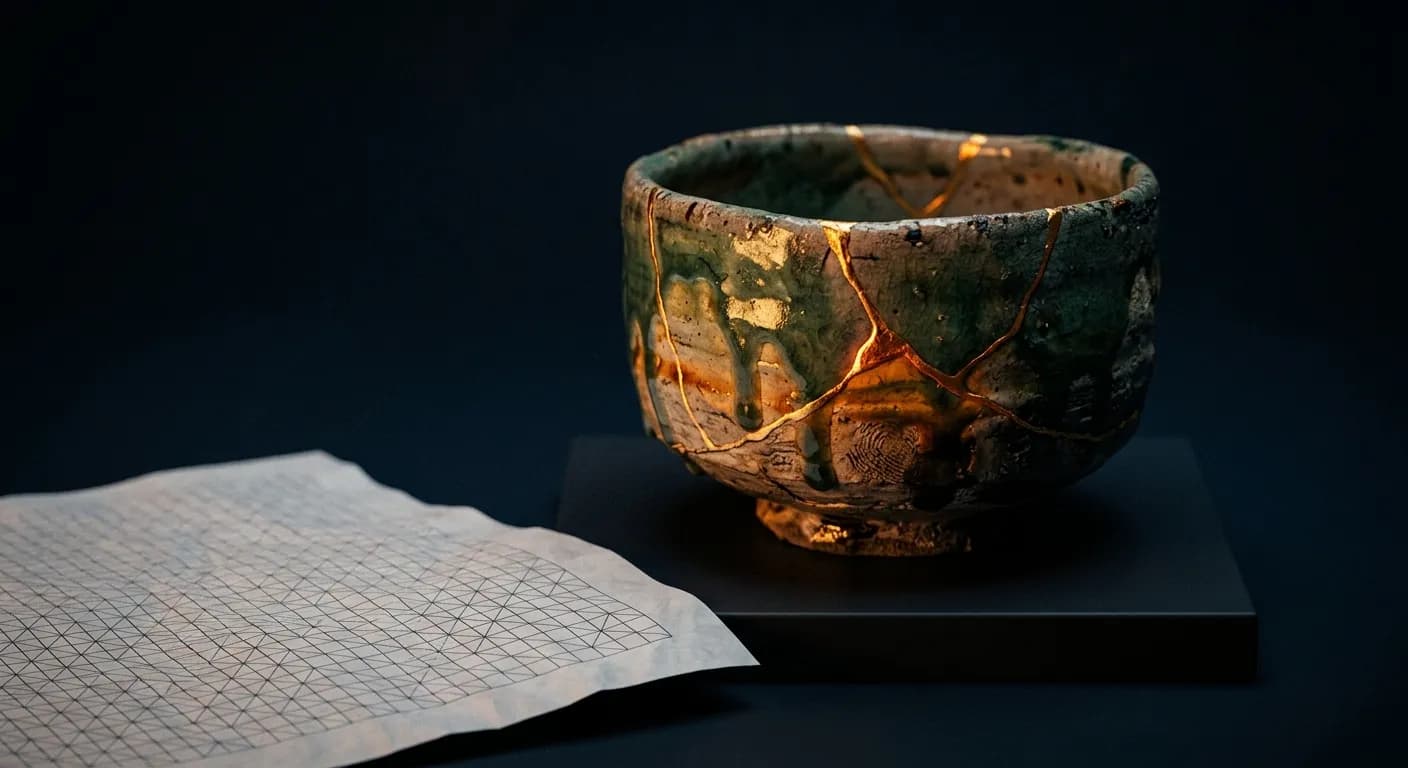
Human-Made Is Becoming a Luxury Brand
A browser game called "YOUR AI SLOP BORES ME" pulled fifty million page views in a week, with 16,000 people playing at peak. Humans roleplaying as AI, drawing and writing under time pressure, deliberately styled like a 1990s webpage. Creator Mihir Maroju said it came from "a frustration for AI art and its proliferation," and I think that frustration is one of the most underreported cultural currents right now. People aren't just annoyed by AI content, they're rebelling against it, and the rebellion is starting to look like a future market.
The Psychology of Pushback
Reactance theory has been around since 1966 and the idea is simple: when people feel their freedom is threatened, they don't passively accept it, they push back harder. I think this explains what's happening with AI content better than any market analysis could.
Consider the Harris Poll numbers that came out recently. More than 70% of Gen Z agree TikTok feels "staged and performative," nearly 40% say they're seeing more low-quality AI content, and more than half trust the platform less. That reads like reactance kicking in. They had something authentic, felt it slipping away, and now want it back badly enough to make purchasing decisions around it.
The perception research tells the same story. Researchers played identical music tracks to listeners, labeled one "AI-made" and the other "human-composed," same recording, same performance, same everything, and the AI-labeled version was rated less moving. This is telling, the label alone changed how people felt. That's not rational, it's visceral.
Platforms Picking Sides
The speed of the platform response is surprising.
LinkedIn deployed a model to detect and deprioritize AI-generated posts, and organic reach on the platform dropped roughly 50% year-over-year as the algorithm began penalizing generic, template-style content. Over half of long-form LinkedIn posts were AI-generated in 2025, so the platform was genuinely drowning. Hacker News added a guideline against AI comments, and moderator dang put it plainly: "We'd much rather hear you in your own voice, and the cost of a few mistakes is far less than the cost of losing that." Stack Overflow had already banned AI answers back in 2022.
This is trust correction, and it's happening everywhere. Flooding feeds with AI content doesn't just annoy users, it degrades what made the platform valuable in the first place. Etsy removed four times the normal number of listings for violating their Handmade policy, Comic-Con banned AI art for 2026, even postmarketOS, a tiny open-source project, forbids AI contributions. Different communities, same conclusion.
Authenticity as Premium
The backlash is interesting enough on its own, but the real story is how fast "human-made" is becoming a real brand strategy.
Dove pledged to never use AI to represent real women. Aerie posted "No AI-generated bodies or people. Real people only. No retouching, no AI. Engagement surged 75%. Pluribus ends every episode with "This show was made by humans," and iHeartMedia launched a "guaranteed human" tagline after 90% of listeners said they want human-created media. These aren't edge cases, this is becoming mainstream positioning.
The consumer data is moving fast. Currently, only 26% now prefer AI creator content, down from 60% in 2023. CivicScience, NielsenIQ, Originality.ai, they all point the same direction: 36% less likely to buy from brands using AI in ads, weaker memory activation, human-written websites selling for 39% more.
We've seen this pattern before and I kind of feel like the industry should have too. Organic food started as a hippie niche, now commands a 30-60% premium. Vinyl has grown for 19 consecutive years, with Gen Z buying more vinyl than ever. Craft beer grew out of the same impulse. Every time, people paid more for something that felt real, and a cottage industry grew around certifying that realness. Not By AI badges already appear on hundreds of thousands of pages.
The Trust Premium Economy
Perhaps something genuine is shifting here. We spent two years being told AI would make everything better, faster, cheaper, and the collective response from an entire generation is basically: we don't care, we want to know a person made it. It's like computers can beat any human at chess, but people are still interested in human players. Delicious food can be made faster than ever using automation, but still people prefer slow food and find it more delicious.
Interesting to think that Merriam-Webster made "slop" the Word of the Year for 2025, and probably half the industry still hasn't absorbed what that portends.
We seem to be watching the birth of a premium 'trust' economy. The more aggressively companies push AI content into feeds and products, the more valuable human-made becomes, and tens of millions of people are now commercially motivated to prove it.