Cursor Lied About Its Model. Now Everyone Has to Pick a Side.
Cursor benchmarked their new model above Claude Opus 4.6. The model was someone else's.
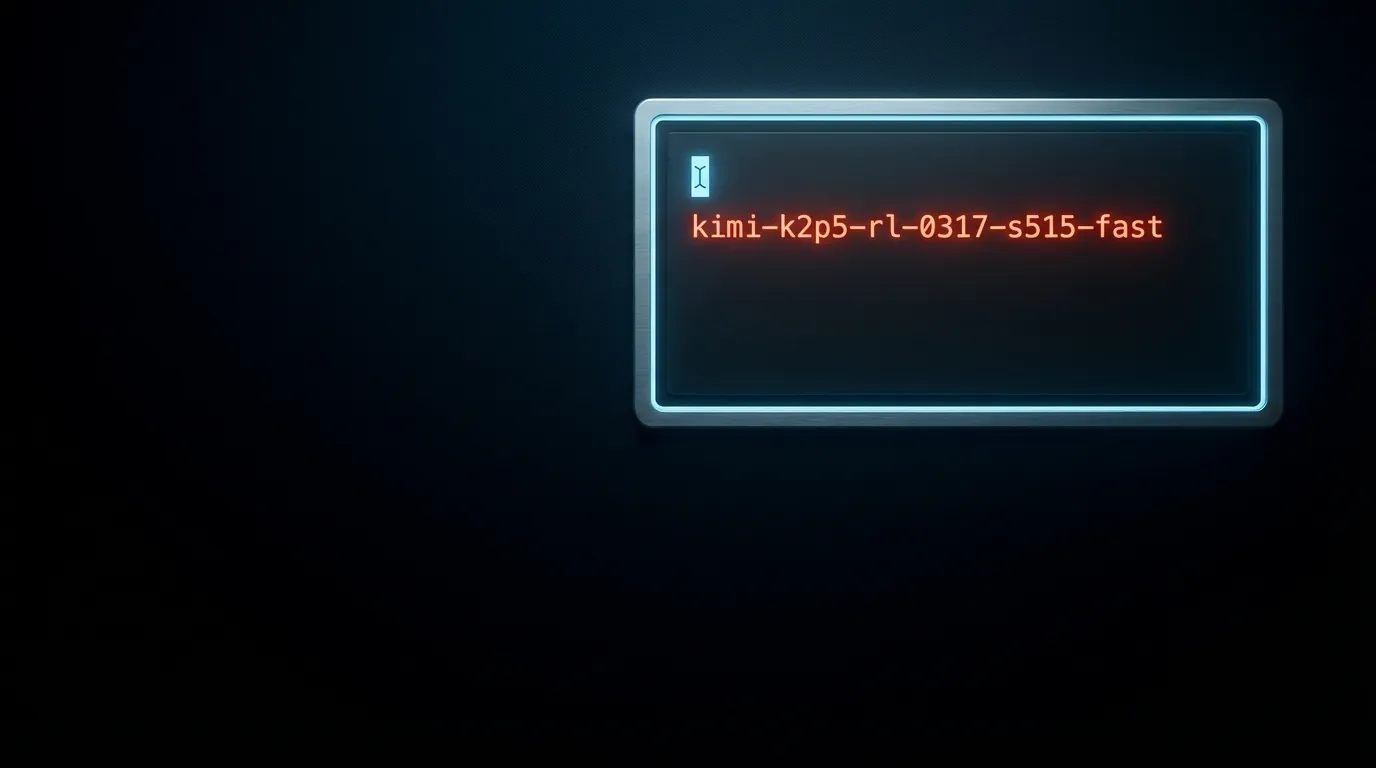
On March 19, Cursor published a blog post introducing Composer 2 — "our first continued pretraining run," "our training," frontier-level at coding, benchmarked at 61.3 on their proprietary CursorBench against Claude's 58.2. The whole announcement read like a company that had crossed a threshold: a coding AI company that actually builds its own AI. However, within days, a developer routing traffic through a debug proxy found a plain-text model ID in the response: accounts/anysphere/models/kimi-k2p5-rl-0317-s515-fast. Kimi K2.5. A Chinese open-source model from Moonshot AI, released in January. The post reached hundreds of thousands of views inside 24 hours, a Moonshot engineer confirmed the tokenizers were "completely identical" before quietly deleting his post, and Elon Musk replied "Yeah, it's Kimi 2.5."
What They Said vs. What They Meant
I think the thing that stung people wasn't the underlying choice of model. It was the framing.
Cursor co-founder Aman Sanger acknowledged it was "a miss to not mention the Kimi base in our blog from the start." He also clarified that Composer 2 started from an open-source base, with only about a quarter of the compute in the final model coming from that base and the rest being their own training. Both statements are probably true. They're also the kind of clarifications you only offer after you've been caught, and the difference between those two things matters.
Kimi K2.5 is a 1-trillion-parameter mixture-of-experts model with 32 billion parameters activated per request and it's genuinely impressive. Cursor did real work on top of it: reinforcement learning fine-tuning, infrastructure optimization, a serving layer through Fireworks AI. The training date in the model ID is March 17, two days before the blog post, so it wasn't a rushed launch, it was a deliberate positioning choice. The language in the announcement — "our training," "our first continued pretraining run" — wasn't an oversight. It was a frame, and the frame came with legal and PR consequences that weren't probably noticed.
The License Nobody Read
Kimi K2.5 ships under a Modified MIT License with one added clause: products with more than $20 million in monthly revenue or more than 100 million monthly active users must "prominently display 'Kimi K2.5'" in their product. Cursor's ARR is reported at $2 billion, making their monthly revenue more than eight times the threshold. Composer 2's launch blog contained zero mentions of Kimi K2.5. Their UI contained zero mentions of it. Moonshot AI's official account then pivoted gracefully to congratulation, praising Cursor for the launch and calling it a foundation they were "proud" to provide, and the "authorized commercial partnership" through Fireworks AI was confirmed only after the controversy surfaced. I'm not a lawyer and I don't know how that clause holds up commercially, but the gap between the license text and what actually shipped is pretty hard to explain. And it turns out Cursor isn't the only company playing this game.
This Is the Industry, Not Just Cursor
Two days before the Composer 2 launch, Rakuten marketed AI 3.0 as a "Japanese AI model" — it turned out to be a DeepSeek V3 rebrand. A16z's Martin Casado has said there's roughly an 80% chance the open-source AI startups pitching him are using Chinese models as their base. Stanford's AI transparency index fell from 58 to 40 in a single year, the vast majority of AI models in production right now are fine-tunes of open-source bases, and community evidence suggests Cursor's first Composer model, released in late 2025, was also built on a DeepSeek-family base. When their head of research was asked directly, he gave an evasive answer about RL post-training. Nobody pressed harder, nobody found the model ID, and Composer 1 shipped as "Cursor's model" without incident.
That's the industry, and not just one company caught in a bad week. Understanding why requires looking at the economics, not just the marketing.
The Economic Logic Is Real, Even If the Framing Wasn't
The structural pressure Cursor was under explains more than greed does.
They were reportedly paying hundreds of millions a year to Anthropic for API access while revenues grew toward $2 billion ARR, the fastest-growing SaaS company in history from a million to $500 million in ARR, but structurally dependent on a supplier who was also a competitor. Building your own model, or at least your own layer on top of open-source infrastructure, isn't vanity. It's the only way to escape a structure that eventually breaks you. On SWE-bench Multilingual, the more neutral benchmark, Claude Opus 4.6 actually leads Composer 2, 77.8 to 73.7, and at roughly one-tenth the cost, Composer 2 doesn't need to win on benchmarks, it needs to win on unit economics. But while that's a legitimate strategy, it isn't is "our first continued pretraining run."
The Community Fixed It in Hours
The most significant part of this story has been underplayed in most of the coverage.
A developer with a debug proxy and a curious mind decoded a model ID, confirmed it against tokenizer fingerprints, and the whole construct collapsed inside a news cycle. No journalist, no regulator, no formal audit. Just an open-source community that knew what to look for. That's not a fluke, it's a structural fact about where transparency is going to come from. The AI companies won't self-disclose, the licenses are inconsistently enforced, and the marketing will always frame the story favorably, but the tools to verify are getting better and cheaper, and the people motivated to use them are paying close attention.
Perhaps we're entering a period where AI product claims function like financial statements: officially published, routinely audited by people who weren't invited to audit them, and occasionally very different from what the footnotes actually say. Sobering to think that Cursor had a million daily active users and more than two-thirds of Fortune 500 as customers before this happened, and they'll probably keep most of them. But the proxy trick is now documented, the community knows how to look, and the next company that ships "our model" without disclosing the base is making a bet that nobody will check.